

 Send Inquiry
Sodium Thiosulphate
Price 45.0 INR/ Kilograms
MOQ : 1000 Kilograms
Sodium Thiosulphate Specification
- Smell
- Odorless
- Other Names
- Sodium Hyposulphite, Hypo
- Melting Point
- 48 C
- HS Code
- 28323010
- Shape
- Crystalline, Granular
- Structural Formula
- Na2S2O35H2O
- Poisonous
- No
- Storage
- Store in cool, dry place; keep container tightly closed
- Boiling point
- Decomposes before boiling
- Ph Level
- 6.5 to 8.0 (5% solution at 25C)
- Density
- 1.67 Gram per cubic centimeter(g/cm3)
- Taste
- Saline
- Solubility
- Soluble in water
- Form
- Powder, Crystal, Granule
- Molecular Formula
- Na2S2O35H2O
- Purity
- 99% Min
- Molecular Weight
- 248.18 g/mol
- Classification
- Inorganic salt
- Chemical Name
- Sodium Thiosulphate
- CAS No
- 7772-98-7
- EINECS No
- 231-867-5
- Grade
- Industrial, Analytical Reagent
- Standard
- Meets analytical and industrial standards
- Type
- Inorganic Chemical
- Usage
- Photographic processing, water treatment, chemical reagent
- Main Material
- Sodium Thiosulphate Pentahydrate
- Application
- Other
- Non Toxic
- No
- Solubility in Alcohol
- Slightly soluble
- Incompatibility
- Strong oxidizing agents, acids
- Decomposition
- Releases SO2 and Na2SO4 on strong heating
- Hazards
- Non hazardous under standard handling
- Packaging
- 25 kg / 50 kg HDPE bags with inner liner or as per customer requirement
- Shelf Life
- 2 years if stored properly
- Stability
- Stable under normal conditions; effloresces in dry air
- pH of 1% Solution
- 6.5 - 8.0
- Appearance
- Colorless or white crystals
Sodium Thiosulphate Trade Information
- Minimum Order Quantity
- 1000 Kilograms
- FOB Port
- hazira,bhavnagar
- Payment Terms
- Paypal, Cash in Advance (CID), Letter of Credit at Sight (Sight L/C)
- Supply Ability
- 5000 Kilograms Per Day
- Delivery Time
- 7 Days
- Sample Available
- Yes
- Sample Policy
- Contact us for information regarding our sample policy
- Packaging Details
- Plastic Bag Packaging.
- Main Domestic Market
- All India
- Certifications
- ISO 9001 : 2015
About Sodium Thiosulphate
We are offering our clients a wide range of Sodium Thiosulphate from a very long time in the past as the reckoned manufacturers, suppliers and exporters from Gujarat, India. This Sodium Thiosulphate is mainly utilized for treating tinea versicolor which is a skin infection. This chemical works by killing the fungus which causes this skin infection. Moreover, this product is also utilized in leather, rubber, textile industries along with chemical and practical labs for various purposes. Also, these products are tested on various parameters before delivering them to our clients.
Features:
- Precise pH value
- White solid in nature
- Perfect composition
- No harmful effects
Boiling point
100 deg C
Soluble in
Water
Appearance
White Crystals
| Business Type | Manufacturer, Exporter, Supplier, Retailer |
| Formula | Na2S2O3 |
| Molar mass | 158.11 g/mol |
| Density | 1.67 g/cm3 |
Versatile Chemical with Wide Applications
Sodium Thiosulphate is valued in multiple industries for its reliable chemical properties and stable form. As a key reagent, it is indispensable in photographic processing, water treatment, gold extraction, and analytical testing. Its crystalline structure, high solubility in water, and shelf life of two years make it ideal for both industrial and laboratory uses. Packaged securely to prevent moisture ingress, it offers consistent performance and safety during handling and storage.
Storage and Handling Guidelines
For optimal shelf life and quality, Sodium Thiosulphate should be stored in a cool, dry environment within tightly closed containers. It is stable under normal storage but may effloresce if exposed to dry air. Avoid contact with strong oxidizing agents and acids, as these materials may provoke hazardous reactions. Use HDPE packaging with inner liners for best protection against humidity and contamination.
FAQ's of Sodium Thiosulphate:
Q: How should Sodium Thiosulphate be stored for maximum stability?
A: Sodium Thiosulphate should be kept in a cool, dry place, away from moisture, acids, and strong oxidizing agents. Containers should be tightly closed to prevent efflorescence and maintain a shelf life of up to two years.Q: What are the main industrial uses of Sodium Thiosulphate?
A: Common applications include serving as a fixer in photographic processing, dechlorinating drinking and wastewater, extracting gold, laboratory analysis, and other chemical processes that require its reductive properties.Q: When is Sodium Thiosulphate most commonly used in water treatment?
A: Sodium Thiosulphate is frequently used during dechlorination, particularly after water disinfection processes that use chlorine. It neutralizes residual chlorine to make the water safe for further use or discharge.Q: Where does Sodium Thiosulphate find benefit in analytical laboratories?
A: In analytical labs, Sodium Thiosulphate acts as a titrant in iodometric titrations, helping quantify certain analytes. Its reliability and standardization make it a staple reagent for chemical analysis.Q: What is the process of using Sodium Thiosulphate as a photographic fixer?
A: In darkroom photographic processing, Sodium Thiosulphate dissolves unreacted silver halides on film or paper, thus stabilizing the image and preventing future darkening upon light exposure.Q: Is Sodium Thiosulphate hazardous or poisonous under normal handling conditions?
A: This chemical is non-toxic and regarded as non-hazardous if handled according to recommendations. It should be stored properly and handled with care, but does not pose a significant risk in standard applications.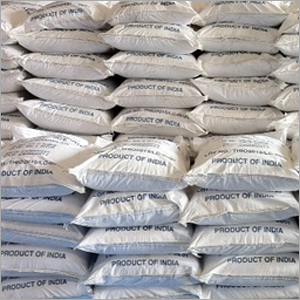
Tell us about your requirement

Price:
Quantity
Select Unit
- 50
- 100
- 200
- 250
- 500
- 1000+
Additional detail
Mobile number
Email

More Products in Sodium Thiosulphate Category
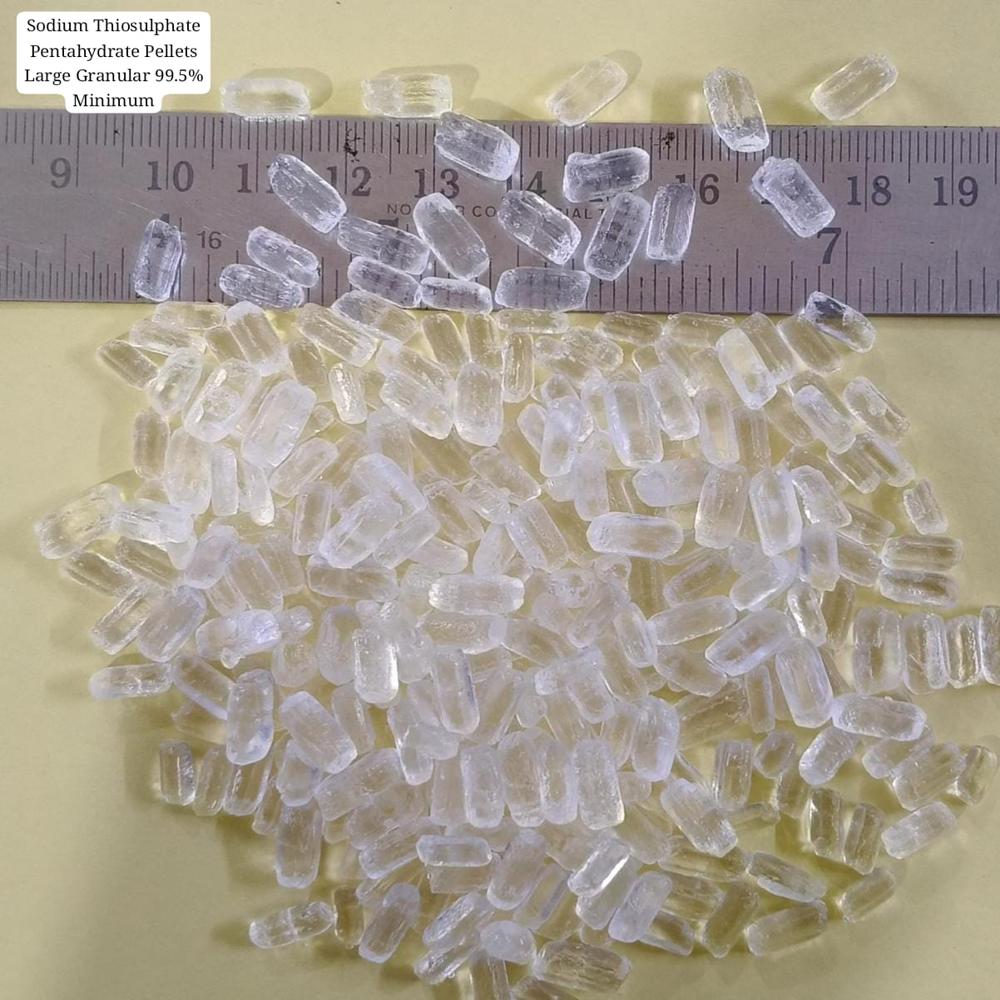
Sodium Thiosulphate Pentahydrate Pellets Large Granular 99.5%
Price 45.0 INR / Kilograms
Minimum Order Quantity : 1000 Kilograms
Grade : Other
Molecular Formula : Na2CO3
Storage : Other
Boiling point : Decomposes on heating
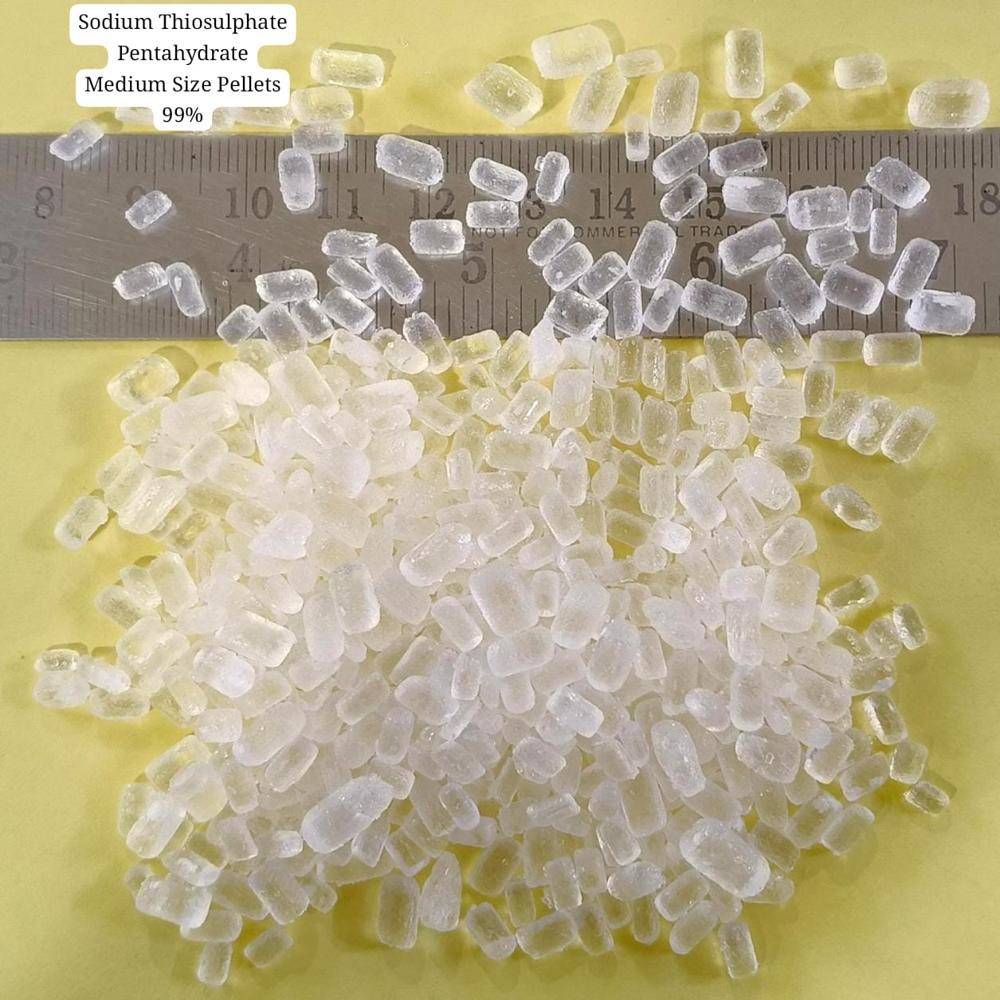
Sodium Thiosulphate Pentahydrate Medium Size Pellets 99%+++
Price 42.0 INR / Kilograms
Minimum Order Quantity : 1000 Kilograms
Grade : Industrial Grade
Molecular Formula : S
Storage : Keep away from moisture
Boiling point : 444.6 C

LAKSHMI CHEMICAL INDUSTRIES
GST : 24CQFPS1185M1ZE
GST : 24CQFPS1185M1ZE
Contact Details

- Plot No 5159,Nr. Karmatur Chowkdi Opp. GEB Sub, Station, GIDC Estate, Ankleshwar - 393002, Gujarat, India
- Phone : 07971645294

- Mr. Ronit
- Mobile : 07971645294


LAKSHMI CHEMICAL INDUSTRIES
All Rights Reserved.(Terms of Use)
Developed and Managed by Infocom Network Private Limited.
Developed and Managed by Infocom Network Private Limited.
